

Building a unified national strategy means getting federal, state, industry, community, and international partners aligned around a central goal: reducing U.S. vulnerability to critical material supply disruptions. This requires coordinating actions across production, processing, trade, technology, workforce, and infrastructure.
We start with a North Star workshop, a cornerstone to our Strategic Design Approaches (SDA). North Star establishes the strategic intent that anchors all SDA work. For example, it shapes GAP analysis by clarifying mission demand and the desired endstate, it provides the capabilities baseline that informs Opportunity Analysis, and it frames the technical objectives in RMAT (described below), among others. By setting this direction early, North Star ensures that subsequent SDA activities build toward a unified objective and that stakeholders operate from a shared understanding of what they are trying to achieve.
Data‑Driven Community Decision Making
U.S. supply chains face processing gaps, permitting barriers, workforce shortages, technology development needs, and geopolitical dependencies. Communities sit at the center of these decisions and ultimately experience both the benefits and the burdens. To navigate this landscape effectively, we must balance economic opportunity with the impact felt by the people within each community.
Our Option Decision Aids (ODA) provide communities, agencies, and industry with dynamic, data‑driven decision-making support. ODA helps stakeholders evaluate competing priorities such as jobs, environmental risk, infrastructure needs, timelines, technology choices, and identify the interventions most likely to create durable capability.
An example of one of our ODAs is our Risk vs Merit Assessment of Technology (RMAT) framework. RMAT ensures early investments focus on the technology pathways most capable of closing processing gaps and delivering long-term resilience. RMAT avoids scattering research and development funding across ideas that do not meaningfully improve supply security. It identifies which technologies should move forward and which remain lower‑value options.
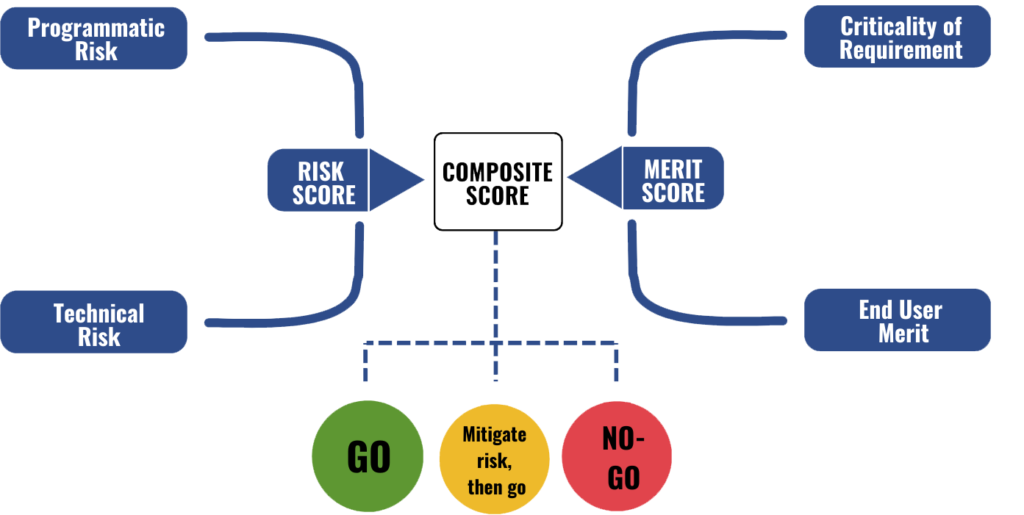
Because risk is mathematically measured by consequence and likelihood scoring, our tools incorporate both so stakeholders focus on the vulnerabilities that are the product of a severity and probability score.
U.S. Critical Materials Strategic Campaign Framework for Action
Our SDA methods generate a wide range of options that are sequenced into decision-ready pathways using the CCAAAPPI framework to mingle the strengths of all stakeholders. (CCAAAPPI: Capability, Capacity, Awareness, Authority, Access, Placement, Policy, and Influence). This enables an unconstrained approach to develop these pathways through our Opportunity Analysis (OA) methodology. OA teases out the “realm of possible” from which decision-ready pathways are developed.
Coordinating a Fragmented Ecosystem
Coordinating the federal government, industry, research institutions, communities, and international partners is difficult. Each has different strengths, incentives, and timelines. But there are some ways the federal government can drive progress and transform this fragmentation into collective momentum.
- Closing the Processing Gap Through Coordinated Capacity Building
A federally led coordination model can drive critical materials projects forward by aligning community readiness with targeted investment and shared expertise. When these pieces move together, the U.S. can turn mined resources into real supply security instead of relying on offshore processing.
- Critical Materials Coalition Resource Sharing Model
A coalition model allows partners to share training, permitting expertise, and technology resources so communities aren’t forced to shoulder building capacity alone. This avoids duplication, accelerates project readiness, promotes collaborations, and expands national capacity.
- National Certification Pipelines
National certification pipelines turn the workforce into a long-term strategic asset by creating transferable, recognized credentials across the critical materials economy.
Ellen as Cross‑Cutting Enabler
In this series we’ve talked about how our AI platform, ELLEN connects materials analysis, risk scoring, supply chain mapping, opportunity identification, and campaign design into one consistent workflow. By serving as the connective tissue across agencies, industry, and communities, Ellen reduces fragmentation and accelerates unified action. ELLEN’s role is simple: keep the system aligned.
U.S. Implementation Roadmap: Industry Coordination & Strategic Engagement Planning
The United States has a credible foundation: federal strategy, resource mapping, workforce initiatives, international cooperation, commercial diplomacy, and risk‑based tools. Resilience is realized only when projects advance, dependencies diminish, and the system can absorb disruptions with minimal consequence. Policymakers, industry, communities, and workforce partners each have distinct roles in reducing risk, increasing capability, and accelerating resilient project execution.
Resilience requires sustained, coordinated effort across the entire system. Now is the time to turn critical materials resilience into real capability. The U.S. has momentum, and what’s needed now is coordinated action. Tier Tech International can help.
This is the final post in our series on U.S. critical minerals strategy and national security.
Critical Minerals and National Security: Time for a Smarter Framework | Part 1
Rare Earth Supply Chains: A Mission-Critical Risk | Part 2
Critical Minerals Supply Chains: Campaigning vs. Declaring | Part 3
Strategic Recommendations for a Unified National Strategy | Part 5

