
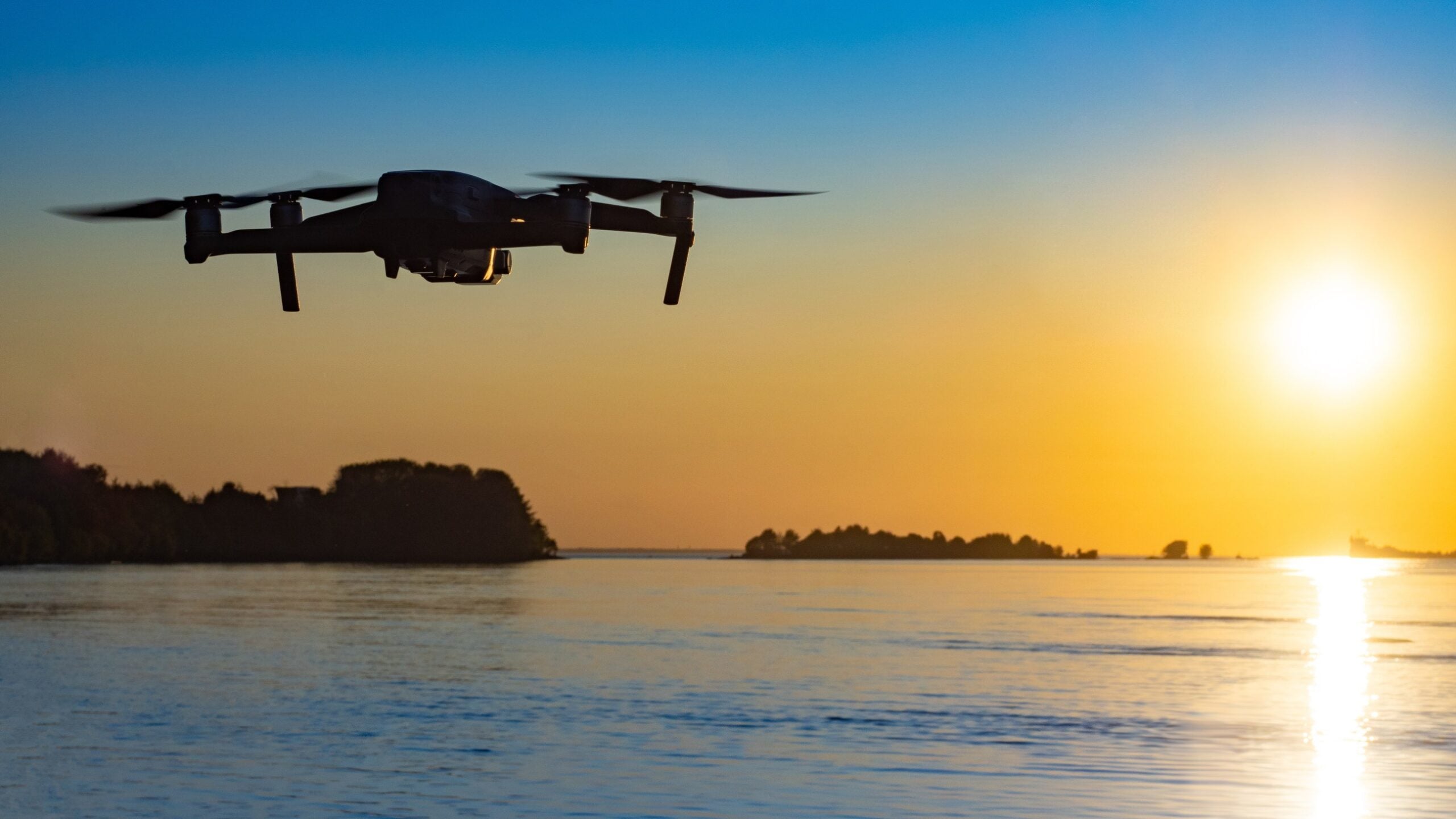
The rapid spread of unmanned systems (UxS) across land, air, and maritime domains presents a cross-infrastructure problem that may overwhelm our current measures to defend against them. These unmanned systems typically fall under one of several categories including: unmanned aircraft systems (UASs), unmanned underwater vehicles (UUVs), unmanned surface vehicles (USVs), and unmanned ground vehicles (UGVs). The utility in multiple domains is particularly salient when considering that militaries have employed UASs, UUVs, and USVs effectively when operating in areas where they are conventionally disadvantaged relative to their enemies.
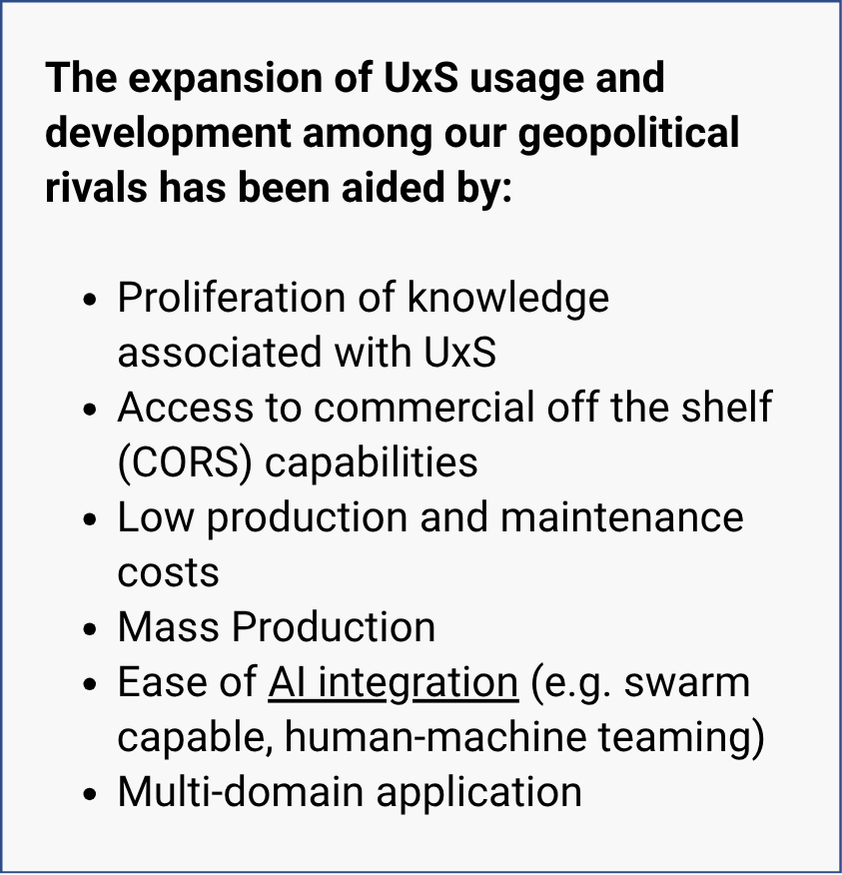
The U.S., partners, and adversaries have implemented these systems effectively to mitigate disadvantages in the last three years. Some of the most notable examples include:
- Intelligence, Surveillance, and Reconnaissance. Militaries around the world use unmanned systems for surveillance in all domains. Effective battlefield reconnaissance no longer requires access to satellites or manned aircraft.
- Kinetic Strikes. Both the Russian and Ukrainian militaries use unmanned systems to hit vital infrastructure (bridges, railways, and power stations) and commercial industrial facilities. Most notably, a USV was used to damage a section of the Kerch Strait Bridge, disrupting rail service for several months in July 2023.
- Ukraine created a dead zone for Russian naval operations in the Black Sea despite its own diminutive navy. Ukraine utilized UASs, UUVs, and USVs to supplement its anti-ship missile capabilities, sinking a third of Russia’s Black Sea Fleet and forcing the rest to port.
- In Operation Spiderweb, Ukraine conducted a large-scale, sophisticated drone operation against multiple Russian airfields in June 2025, damaging or destroying over 40 aircraft, including strategic bombers. Ukraine smuggled domestically produced drones into Russia and launched the drones from trucks.
- Electronic Warfare. Unmanned systems are highly effective in the electronic warfare (EW) domain. EW systems are used to counter drones by jamming signals. EW payloads are also attached to unmanned systems to create autonomous EW platforms.
While battlefield capabilities have been proven, these threats are not limited to the battlefield; they affect and exploit vulnerabilities across all critical infrastructure, industrial, and medical sectors. Additionally, certain unmanned technologies present a serious potential to cause cascading effects across multiple domains.
Challenges with Developing and Implementing Counter-Unmanned Systems Strategy
Current countermeasures remain fragmented, reactive, and often out of step with the evolving threat landscape. The US military must build and implement effective c-UxS capabilities to protect its more expensive and complex military assets, its industry, and personnel. The widespread use and rapid implementation of unmanned systems among U.S. adversaries in recent years requires that the U.S. adapts its defense systems and strategies to address the wide variety of ways in which unmanned systems are used.
C-UxS capabilities have several primary challenges that must be addressed. These include:
- Identifying the targets that are most vulnerable and/or most likely to be attacked by unmanned systems (e.g. critical infrastructure or private sector).
- Predicting a realistic range of effects (including human lives, intelligence collection, or monetary cost) to potential targets if exploited.
- Identifying and prioritizing the myriad of technologies needed to counter unmanned systems.
- Finding the most cost-effective ways to counter particular unmanned systems (both passive and active defenses).
- Integration to build an effective defense apparatus, strategy, policies, plans, and doctrine to counter unmanned systems.
How can TTI Help?
Building effectively integrated c-UxS capabilities is difficult, but our processes can assist in streamlining c-UxS development and integration across the USG and industry. TTI’s Strategic Design Approaches (SDA) are exceptionally useful for addressing the unmanned systems challenges by allowing organizations to visualize, anticipate, and adapt to problems. Specifically, RMAT (Risk vs Merit Assessment of Technology) and OA (Opportunity Analysis) can be leveraged for future strategy and planning efforts, especially in situations where the recommendation of actions and analytical rigor are required.
- OA: Unconstrained Option Development. Opportunity Analysis (OA) is an innovative “team approach” leverages insights and expertise across multiple relevant fields to drive both decision-ready and unconstrained options, designed to be delivered in a sequenced manner by several stakeholders. OA provides a holistic approach by integrating strategic objectives of different organizations and sharing the burden of a complex problem across the CCAAAPPI of each stakeholder.
- RMAT: Decision-Making Rigor. TTI’s Risk vs. Merit Assessment of Technologies (RMAT) process can systematically lay out all viable technologic and programmatic paths for the future of countering unmanned systems. RMAT would assist decision-makers within both the USG and industry in prioritizing the technologies using a quantitative scoring methodology informed by subject matter experts across several relevant fields. The technologies would be specific to the missions to counter unmanned systems, and RMAT would focus on the mission risks and programmatic risks weighed against the operational merit posed by each technology area.

